
Member
ASAP Receives National AmeriCorps Planning Grant
ASAP has received a year-long grant of $150,000 from AmeriCorps, the federal agency for national service and volunteerism, to plan a national service program to catalyze adaptation work in rural communities. Rural communities have some of the lowest capacities in the United States to adapt to worsening climate impacts. ASAP’s AmeriCorps program concept seeks to…
Read MoreA Message From President Emily Wasley on the Importance of ASAP in the Adaptation Community
Join ASAP’s first-ever giving campaign and hear from ASAP members on how the Network inspires them and has been a driving force in advancing their career. The campaign ends September 18, make your contribution today! This week hear from ASAP’s President Emily Wasley on what makes ASAP a place we all love. How did you find ASAP?…
Read MoreWhat Inspires You? ASAP’s President-Elect Julia Kim Shares Her Insights
Join ASAP’s first-ever giving campaign and hear from ASAP members on how the Network inspires them and has been a driving force in advancing their career. The campaign ends September 18, make your contribution today! Meet ASAP’s President-Elect Julia Kim and understand how she came to love ASAP: How did you find ASAP? I was…
Read MoreClimate Change and the Built Environment – Acting as a Collective Whole
This is a featured blog by ASAP Member Lisa Churchill. “Many of us can point to a time in our lives that influenced what we might do when we grew up. For me, it began with a box of 430-million-year-old fossils that my parents collected when they lived in Wisconsin. I was around five years old when…
Read MoreUncovering Our Assumptions With American Resiliency
This is a featured blog from ASAP Member Emily Schoerning, Founder of non-profit American Resiliency. What are Your Knowledge Assumptions? My name is Emily Schoerning. As a researcher in science education, I’ve spent years studying how we acquire knowledge, and what unexpected barriers make it harder for us to learn new things. One of the…
Read MoreBreaking the Disaster Cycle

By Dakota Fisher and Beth Gibbons Dakota Fisher is a Community Planner working for the Federal Emergency Management Agency (FEMA). The views presented in this newsletter are his opinion and may not reflect the opinions of FEMA. Beth Gibbons is the Executive Director of the American Society of Adaptation Professionals. Adaptation is, and must continue…
Read MoreEarth Refuge: A New Face Addressing Climate Migration
By James Sedlak, ASAP Member My name is James Sedlak, a former wildland firefighter turned climate adaptation professional. Since my last fire season, I’ve been more involved in the climate migration field by joining the American Society of Adaptation Professionals (ASAP)’s related programs and volunteering for a new think tank which I am excited to…
Read MoreServing at the Nexus of State and Local Climate Planning
By: ASAP Member Miles Gordon The California Adaptation Planning Guide, a state-produced resource for local governments and regional planning agencies who want to undertake climate adaptation planning in their respective jurisdictions, has been in the midst of a two-year update process since 2018 and is set to be transmitted to the general public in early…
Read MoreASAP Members Collaborate to Launch Policy Campaign
By: Miles Gordon, ASAP Member Over the past two weeks, I have been working as part of a group of ASAP members to plan and execute an extensive messaging campaign to urge our federal representatives to include climate adaptation and resilience investments in upcoming federal coronavirus relief and infrastructure bills. With a new round of…
Read MoreResilient DC: A Strategy to Thrive in the Face of Change
DC is boldly moving their resilience strategy forward. After two years of iterative engagement with residents, the capital city’s unique approach includes one of our favorite topics: individual resilience! Check out the Resilient DC report for the nitty gritty on resilience in the nation’s capital city.
Read MoreFayette and Kanawha Counties Improve CRS Ratings
West Virginia Division of Homeland Security and Emergency Management (DHSEM) recently recognized the counties of Fayette and Kanawha in their efforts towards fostering more disaster-resistant communities. These efforts led to the counties’ Community Rating System (CRS) classes to improve, which resulted in flood insurance premium reductions through the National Flood Insurance Program (NFIP).
Read MoreGreater Miami Resilient305 Strategy Released
This past month in Southeast Florida, Miami-Dade County, an ASAP organizational member, alongside the City of Miami and the City of Miami Beach released their Resilient305 Strateg. The Resilient305 Strategy will act as a guide for the Greater Miami area and the Beaches’ climate resilience challenges, touching on topics from rising sea levels to public health and affordable housing.…
Read MoreRestorative Green Infrastructure in the South
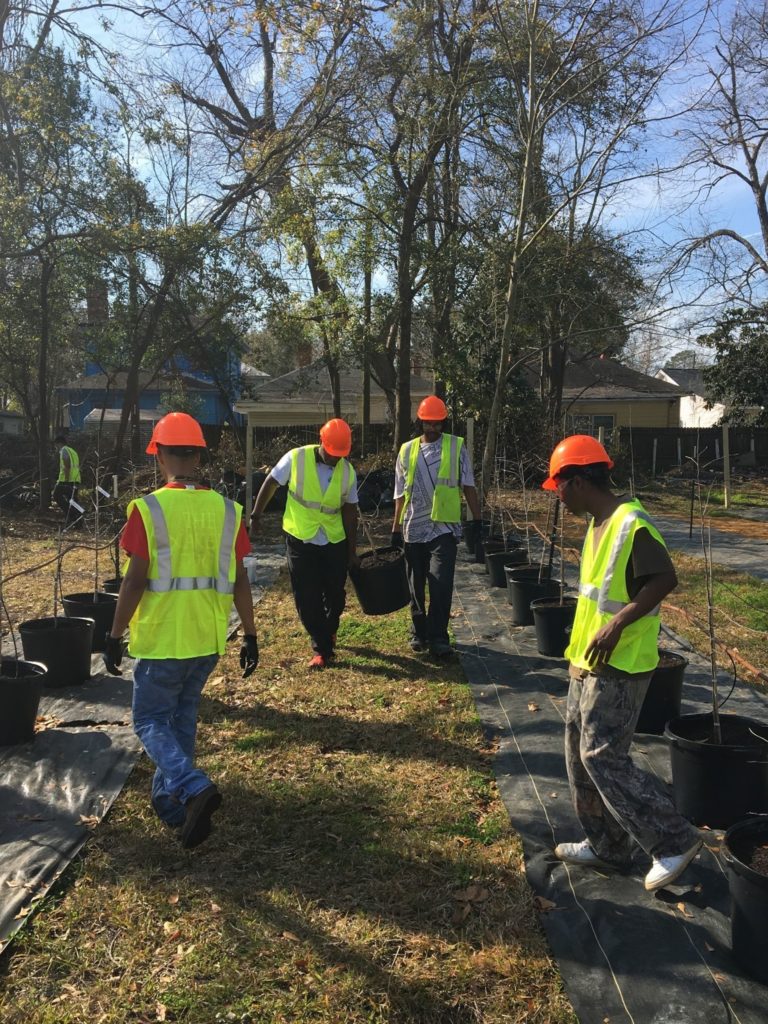
Trees are the cornerstone of Savannah, GA’s green infrastructure system. With increases in population and overall city growth, the number of trees and tree canopy cover has drastically decreased. In an effort to restore Savannah’s green canopy, renew several marginalized communities, and reduce stormwater runoff and flooding events, Savannah’s Office of Sustainability and their partners launched a…
Read MoreMescalero Apache Tribe Adapts to a Warmer and Drier Climate
Home to the Mescalero Apache Tribe, the Sacramento Mountains in southern New Mexico are experiencing a warmer, drier climate and an increase in extreme weather events. In the face of a changing climate, the Tribe is building capacity—and climate resilience—through forestry management, habitat protection, and an innovative approach to healthy eating. Read this case study…
Read MoreSea Level Rise, A Consideration for New Land Development
Earlier this year, a Judge in Virginia Beach, VA confirmed the City Council could use research on sea level rise to make decisions on zoning and new construction, even if it was not previously built into City codes and regulations. This ruling was the result of a developer suing the City for denying a zoning amendment who…
Read MoreInnovation in climate resilience through large-scale green stormwater infrastructure and public-private partnership
New funding approaches to building climate resilience through green stormwater infrastructure are emerging. In 2019, the Milwaukee Metropolitan Sewerage District planned a public-private partnership (P3), known as Community Based Green Infrastructure (CBGI). The RFP sought a single partner to create a capture capacity of a minimum of 20 million gallons. Along with reducing capture costs,…
Read MoreWalnut Way Conservation Corp: Blue Skies Landscaping
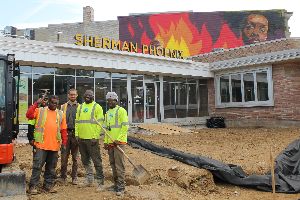
In Lindsay Heights, an African American neighborhood in Milwaukee, WI. Walnut Way Conservation Corp. is building community resilience through their program, Blue Skies Landscaping. Specializing in green infrastructure projects, Blue Skies focuses on beautifying vacant lots, residential, and commercial properties while reducing storm water pollution. Walnut Way employs community members, leading to economic opportunity in…
Read MoreResilient DC – A Strategy to Thrive in the Face of Change
In April 2019, Washington D. C. released its Resilient DC Plan as part of its participation in the Rockefeller Foundation’s 100 Resilient Cities (100RC) initiative. The Resilient DC plan presents strategies to help the District address three-main drivers of change: economic and population growth, climate change, and technological transformations. It is designed to help the District manage threats from…
Read MoreCoastal Risk Consulting
COASTAL RISK CONSULTING ASSISTS MAJOR INVESTOR WITH DUE DILIGENCE FOR PURCHASE AND PROTECTION OF WATERFRONT PROPERTY. Contributed by Hilary Stevens, Coastal Risk Consulting In late 2018, a major investment group was considering the purchase of a waterfront hotel property in Miami Beach, Florida. As part of the due diligence on such a large purchase, the…
Read More